

What To Include On Your Children's Book's Copyright Page
There are quite a few options, these are the elements I chose for MY copyright page

About this newsletter: I’ve written a children’s book, and I’m going to self-publish it. I’m sharing everything I learn as I make that exciting journey.
Oops!— I’ve been missing in action for a few weeks. I’ve been using a template to create bleed pages for all my book pages. You can read all about bleed pages in my previous post.
Today we’re going to look at my copyright page. The copyright page is almost always on the back of a book’s inside title page. You open the book’s front cover, and there’s the title page. You turn the title page, and there’s the copyright page.
Dave Chesson has a nice writeup on copyright pages. He lists 15 items that a copyright page may include, then notes that only two of them (the Copyright Notice and the Rights Reserved Notice) are required. Why include any of the other items? Because they identify your book to sellers and libraries, and provide helpful info to readers.
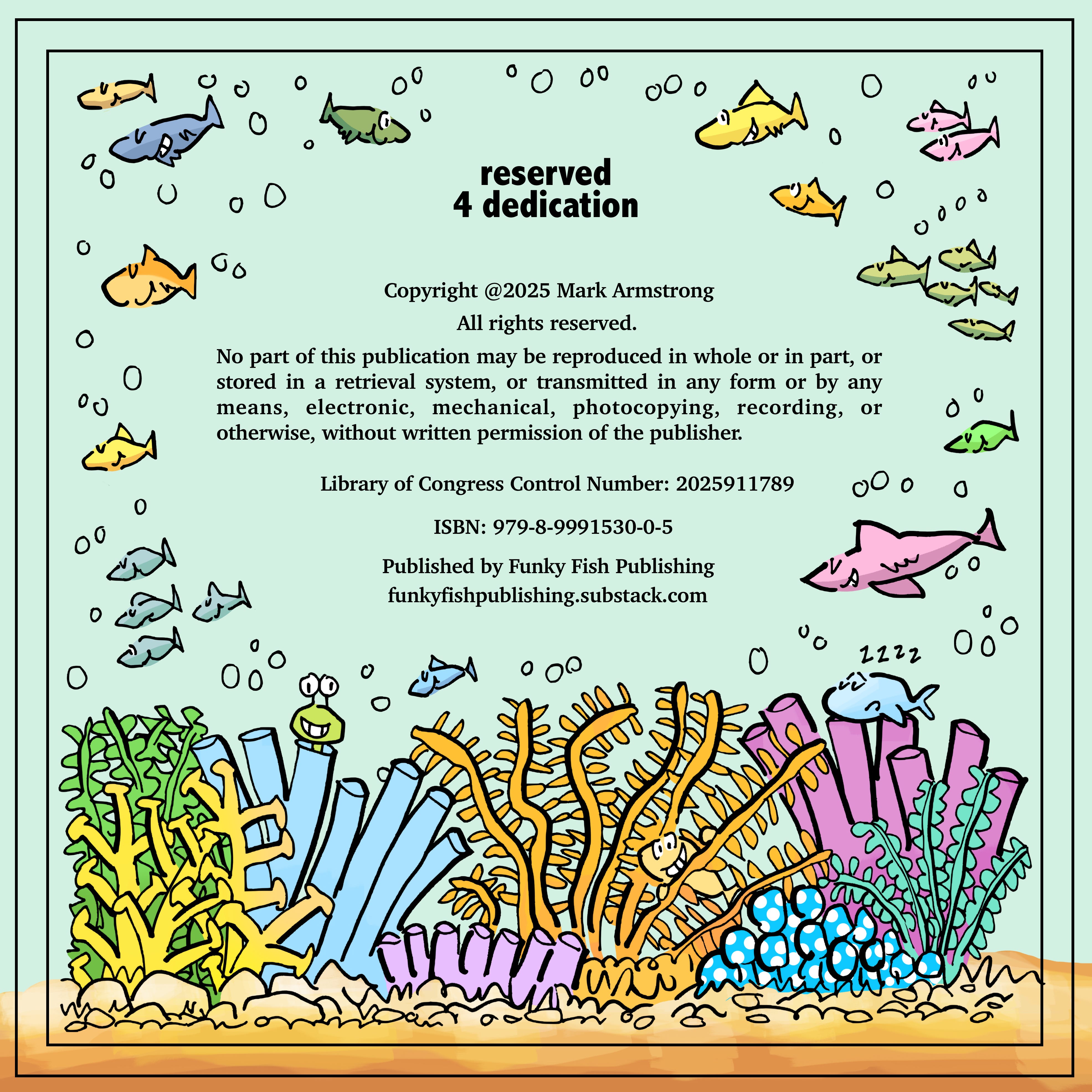
Here’s what my copyright page looks like at the moment:
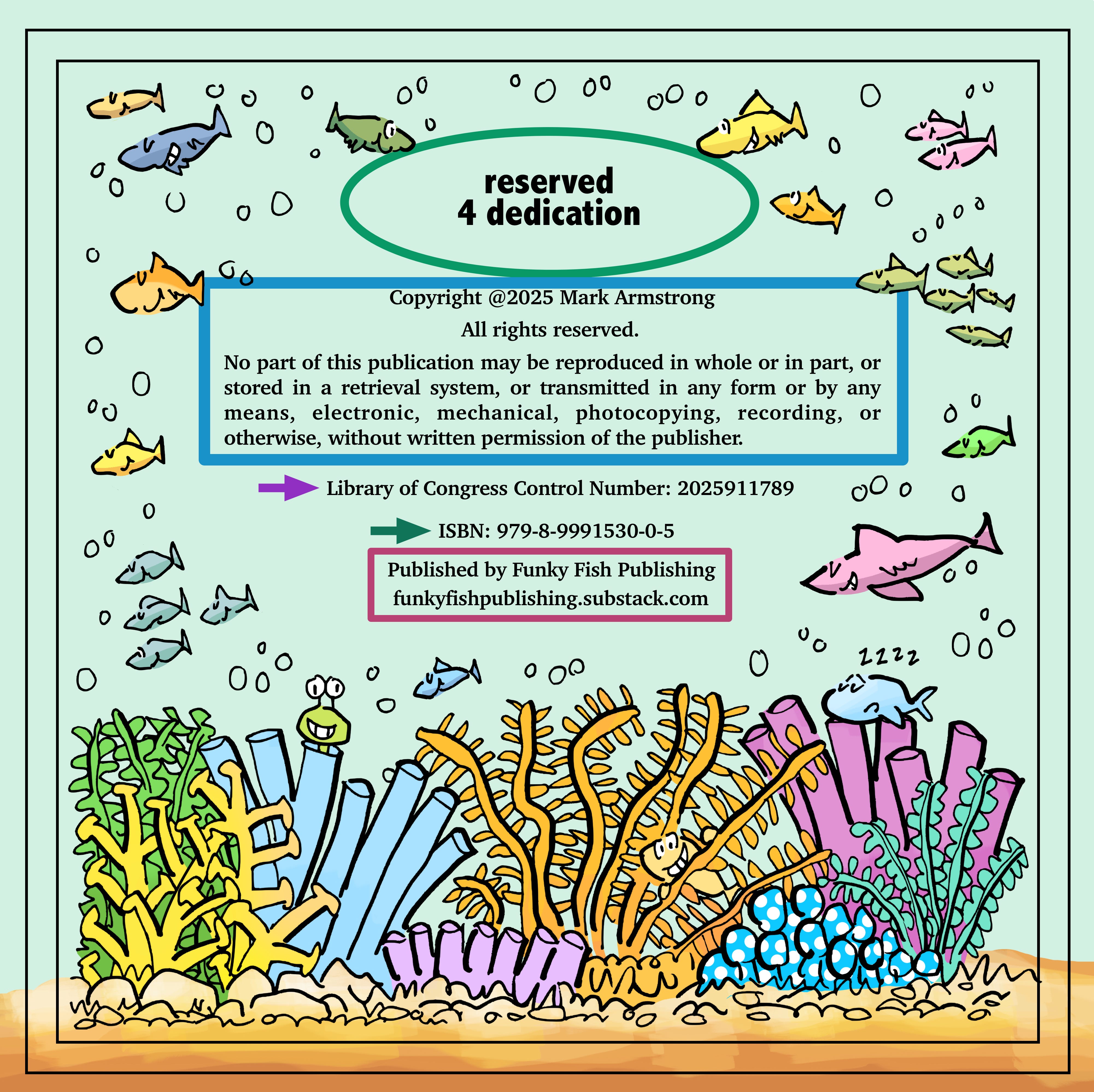
These are the six items I’ve included on my copyright page.
Dedication
Sometimes you’ll find the dedication on a separate page, but most of the time it’s at the top of the copyright page. I won’t reveal mine yet, but I’ve saved a space for it.
Copyright Notice & Rights Reserved Notice
These two items always seem to go together, so I grouped them together in the blue box above. According to Mr. Chesson, all you really need (to be legally covered) is the copyright notice and the “All rights reserved” statement like so:
©2025 Mark Armstrong. All rights reserved.
He notes that many authors prefer a longer version, and as you can see (above), I opted for a longer version myself. Why that particular version that mentions “in whole or in part,” retrieval system, electronic transmission, et. al.? It seems to be today’s standard rights clause. I have several dozen children’s books I bought for research purposes, and most of them have the extended rights statement shown above.
Library of Congress Control Number
You don’t need an LCCN, but I find the idea enormously appealing. It’s too much to cover here, so I’ll cover it in my next post.
ISBN
International Standard Book Number. A must-have if you intend to sell your book through bookstores, either online or off. I covered ISBNs in this previous post.
Publisher
Why include the publisher? It’s in case someone wants to get in touch with you. Maybe a reader wants to tell you how much they enjoyed your book— a testimonial you could feature on your author page or elsewhere.
Including the publisher and publisher website also ties back to the Rights Reserved Notice which states that no portion of the book can be reproduced “without written permission of the publisher.” Maybe someone wants to review your book and would like permission to reproduce one of the pages. They can contact you through the publisher website and ask permission.
(Reminder: I’ll be self-publishing my children’s book, so I’m the publisher. I set up my own publishing company (Funky Fish Publishing), and I explained how to do that in this post.
One further design thought. I talked about my inside title page in this previous post. Here’s what it looks like:
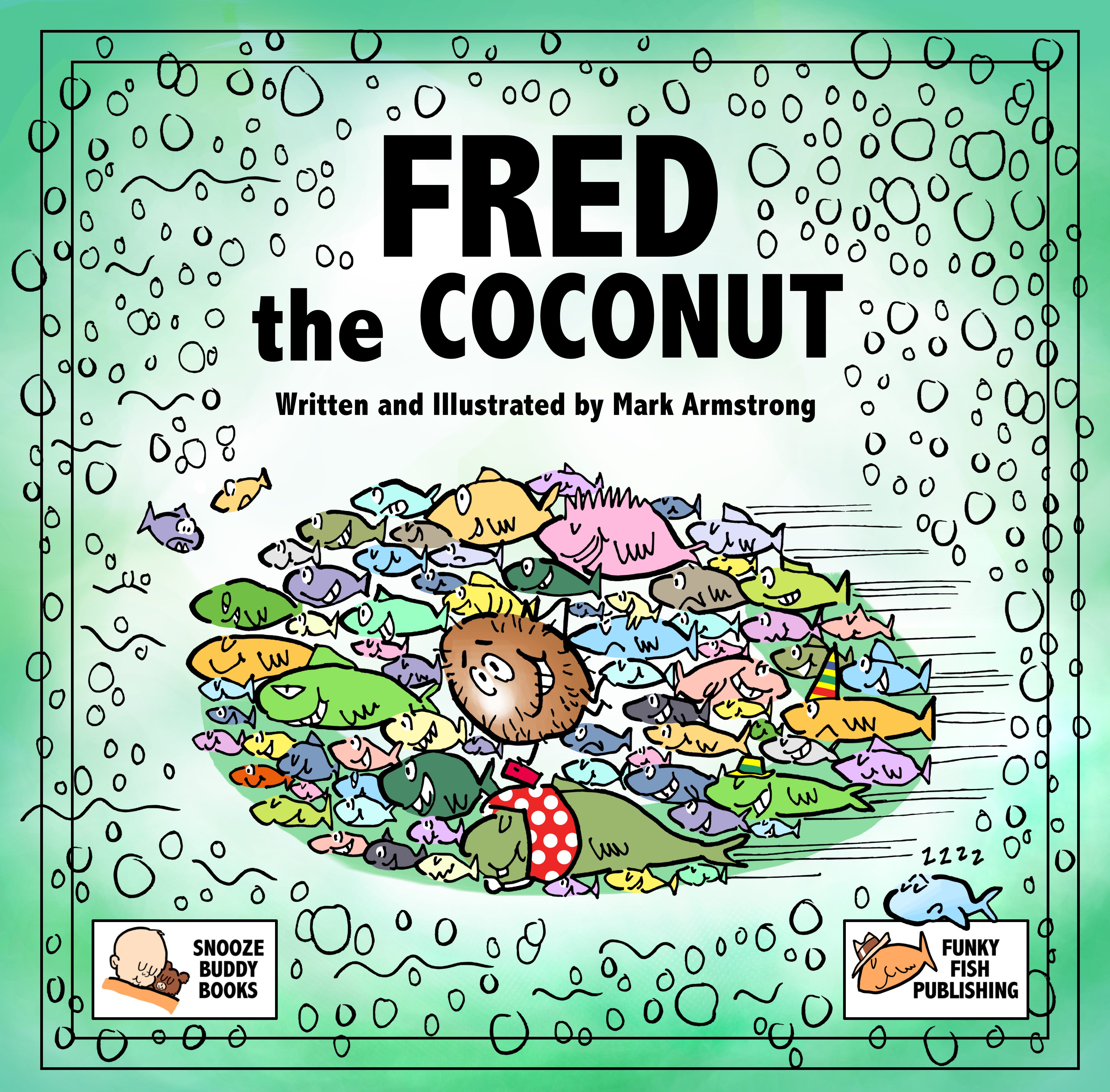
I mentioned that I lifted the title page illustration (Fred being carried along by a school of fish) from one of the inside story pages (below), and how that helps create a sense of anticipation for the young reader.
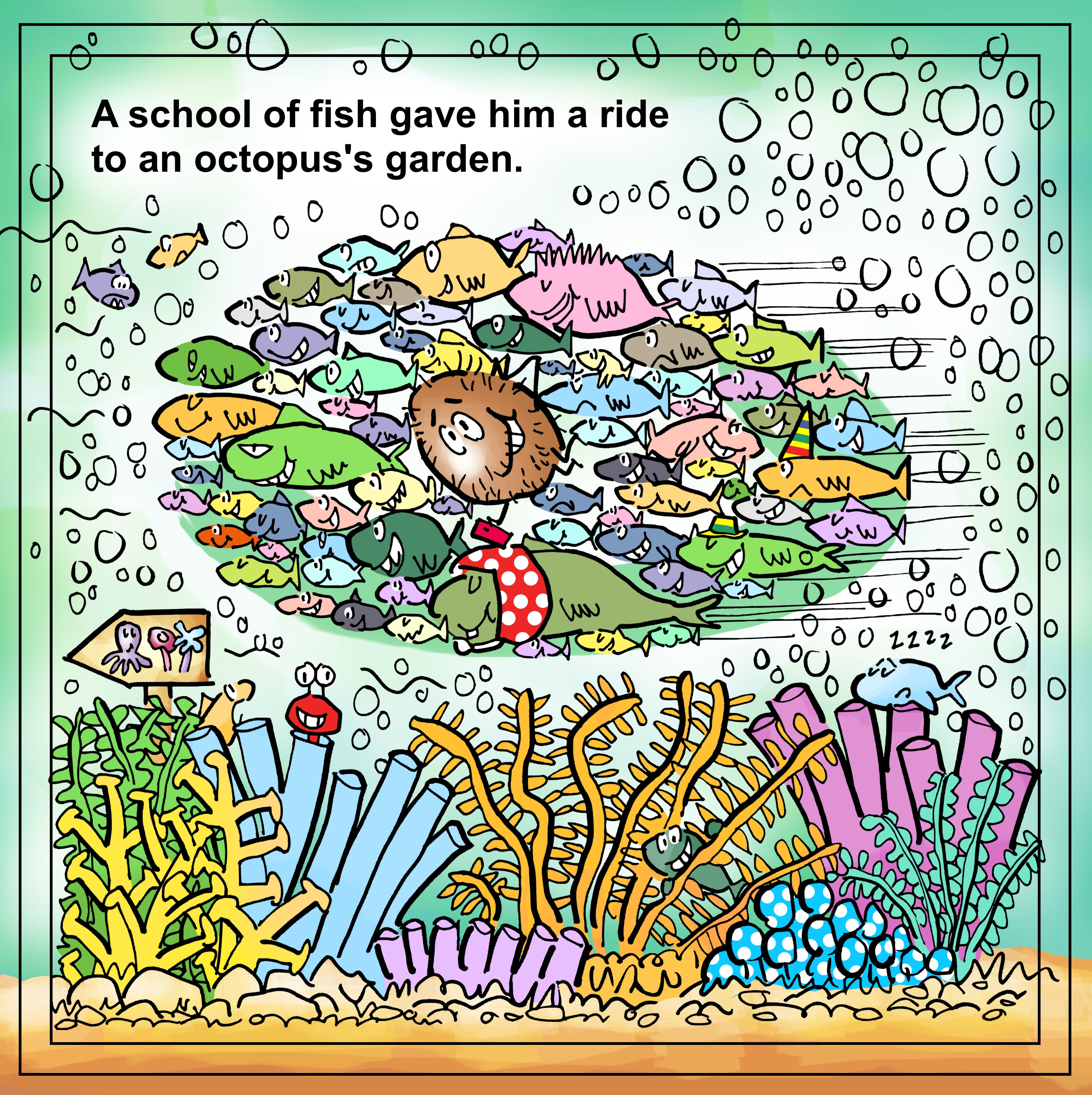
I decided to use the bottom half of that same story page illustration (the colorful seabed vegetation) for my copyright page. That way, both the title page and the copyright page (which follows immediately after the title page) will have a fish/sea motif, which provides a pleasing (unified) design touch.
OK! Hope that was helpful. If you have any questions, please leave same in a comment.
Coming up in the next post: all about Library of Congress Control Numbers, and how getting one is a pretty cool idea.
Not a subscriber?? Let’s fix that!! Just click the banner below.

I also have a newsletter that focuses on design, marketing, and visual communication. Think funny, think visual!

Thanks for reading!